BBQ Florida

Materials

Built for salt air: what survives, and what only looks like it will.

Almost every failure in this category traces back to one decision made badly: the wrong material, sold to the wrong address. Here is the whole picture, including where spending more buys you nothing.

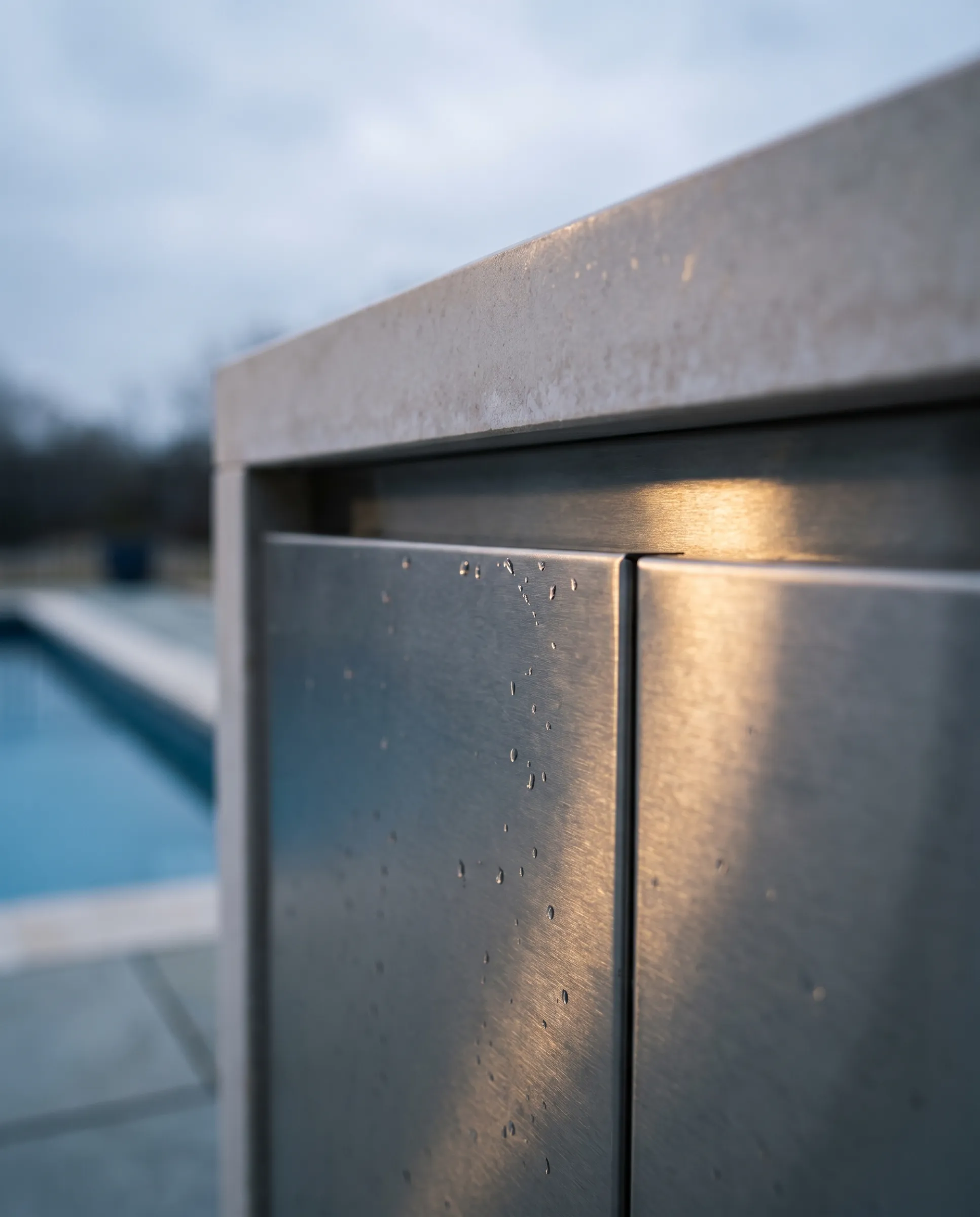
Close detail of brushed marine-grade stainless cabinet fronts with a shadow gap reveal and honed limestone counter

Cabinetry

316 marine-grade stainless

Waterfront and within roughly a mile of salt water

Molybdenum in the alloy resists chloride pitting. It is what boat decks and coastal railings are specified in, for exactly this reason.

Costs meaningfully more, and it is wasted money well inland. It is also only as good as its fasteners — 316 panels on 304 hinges will still streak.

304 stainless

Inland, covered, away from direct salt exposure

The industry default for good reason: strong, clean, repairable, and widely available in every appliance size you might want.

Within a mile of open salt water it pits and streaks, usually inside two seasons. Most rust complaints in this category are 304 that was sold where 316 belonged.

Powder-coated aluminium

Budget-conscious builds, covered areas

Will not rust. Light, quick to install, available in colours stainless cannot do.

It chips, and every chip is somewhere salt air can reach bare metal. Honest about its limits inland; a poor bet on an exposed coastal deck.

Marine polymer (HDPE)

Full sun, direct exposure, pool decks

Genuinely inert. No rust, no rot, no corrosion, and it cleans up with soap. Excellent for door and drawer fronts.

It reads as plastic next to real stone or steel, and it expands and contracts under Florida sun more than people expect. Detailing matters.

Counters

Outdoors in Florida the deciding numbers are UV stability and how the stone handles salt and staining. Sealing is a schedule here, not a one-time step.

Granite

Hard, heat-tolerant, forgiving. Still the default outdoors for a reason.

Porcelain slab

Almost zero absorption and excellent UV stability. Thin edges chip if the substrate is not right.

Limestone

Beautiful and soft — it stains, it absorbs, and it needs sealing on a schedule. Worth knowing before it goes down, not after.

Concrete

Fully custom shapes and integrated sinks. Hairline cracks are part of the material, not a defect.

Which one is yours?

304 is the industry default, and it rusts within a mile of the ocean. 316 adds molybdenum — it is the alloy specified for boat decks. On a coastal property that is not a finish upgrade, it is the difference between ten years and two.

Find out in sixty seconds